My teen can tell pasta brands apart in a blind taste test, not me. Anyway, much like Maggi is the default noodle, Barilla has been the default penne pasta in our house for years. Until now.
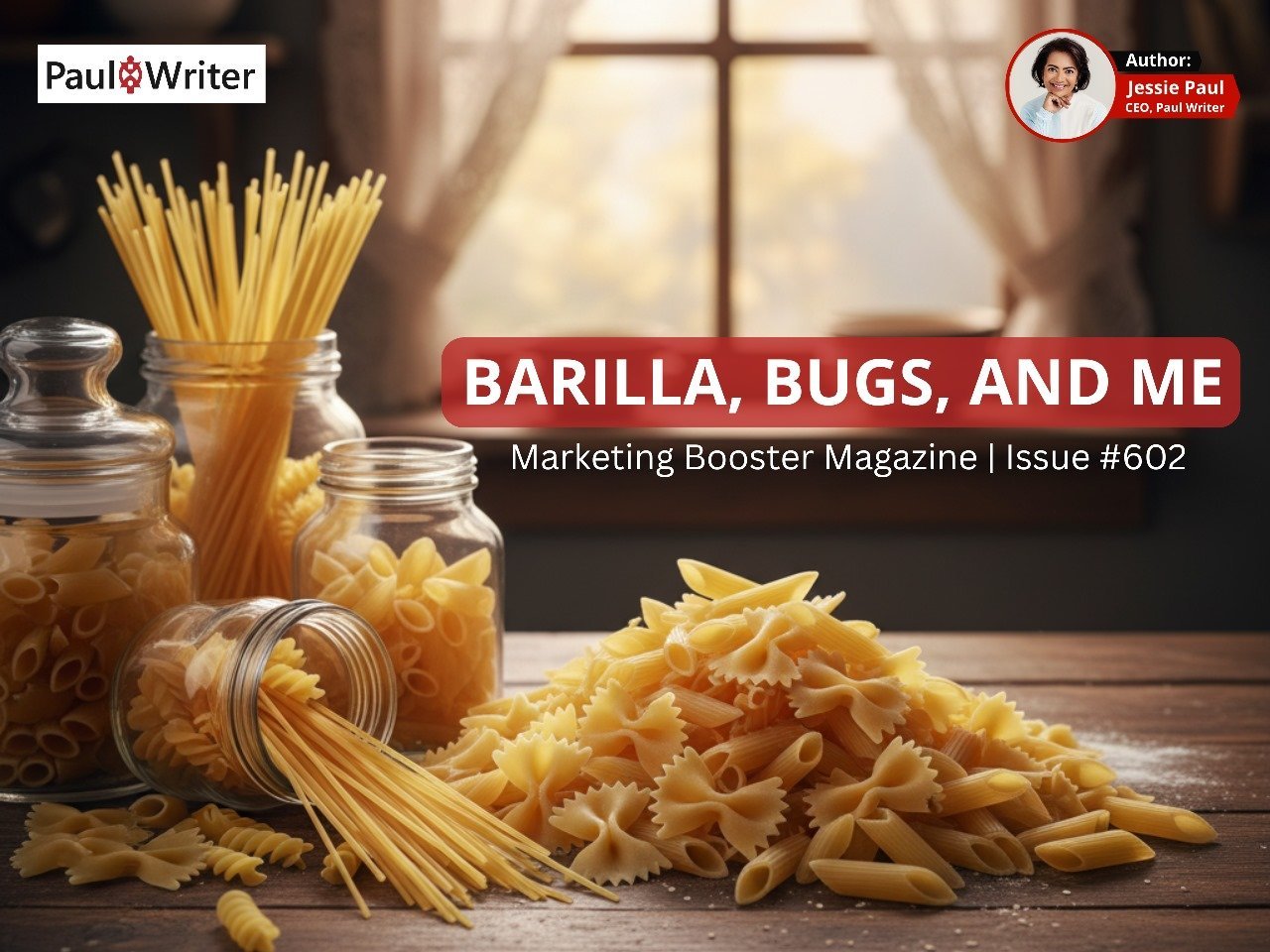
Three times in a row the Barilla pasta I bought on Blinkit has been full of bugs. I complained, of course, but apart from a refund, there has been no change in quality.
Barilla ships its pasta in a simple cardboard box, which has no protection against damp or cracks and therefore is probably damaged in Blinkit’s “dark” shops. This is a food safety issue.
Is Barilla Worth A Premium
I wouldn’t be taken in by BBC’s spaghetti harvest documentary but in all these years of eating Barilla I have never seen an ad for this pasta.
Nor have I researched WHY this pasta is better. Till yesterday. When I discovered that Barilla’s penne pasta actually has some product features not found in all pasta – it’s to do with texture, and absorbency. (I confess that I am impressed that my daughter actually identified this.)
Barilla was amongst the first to embrace TV advertising, starting in Italy in 1957. Dario Fo, Nobel Prize in Literature winner did some of their storytelling. And Sophia Loren has lent her voice. Their ads, in Italy, are in the Piyush Pandey Cadbury’s league of storytelling.
But in India? Nothing. Performance marketing and online portals can ensure that the 4Ps of Kotler are checked off in a fashion, but the more complex aspects of modern growth like the ones outlined by Byron Sharp require old fashioned story-telling highlighting differentiation and credibility.
Now that X is no longer a customer service channel, brands need a new listening channel, or maybe the government needs to create an ombudsperson process for more categories.
Mass Storytelling in the Age of the Long Tail
Piyush Pandey of Ogilvy passed away last week. He transformed storytelling for a wider audience as media exploded in India with the rise of local language channels. I worked in Ogilvy in 1995-1998 and it was a heady period, weaving in the Ogilvy principles (magic lantern?) with the needs of India.
Just say Cadbury’s, Fevicol, or Asian Paints and for a certain generation the ads will pop immediately to mind! That’s an amazing legacy.
Now, we have to build similar stories for the long tail of media. For the first time since the first ad aired in 1941, customers are not glued to a screen long enough to be forced to watch your ad.
Get the customer to ASK to see your ad. Not joking.
I am on screens all day long, but may not see a single ad. It has to be at the point of purchase, perhaps in the product information screens that all online portals have, that they tell me their brand story. Brands have to tease my curiosity and get me to engage with them on my terms.
It’s a whole new challenge!
Who will be the Piyush Pandey of the Pillars of Persuasion?
Philip Kotler Museum of Marketing
I saw this on instagram and thought it was interesting – though is it also a sign that the thinking has moved into history?
It is in Indonesia – if you go let me know if it is worth a trip!
I hope it does not turn out to be a short-lived phenomenon such as the Philip Kotler Presidential Award which in 6 years has had just one recipient from what I can see.
Have a pleasant weekend!