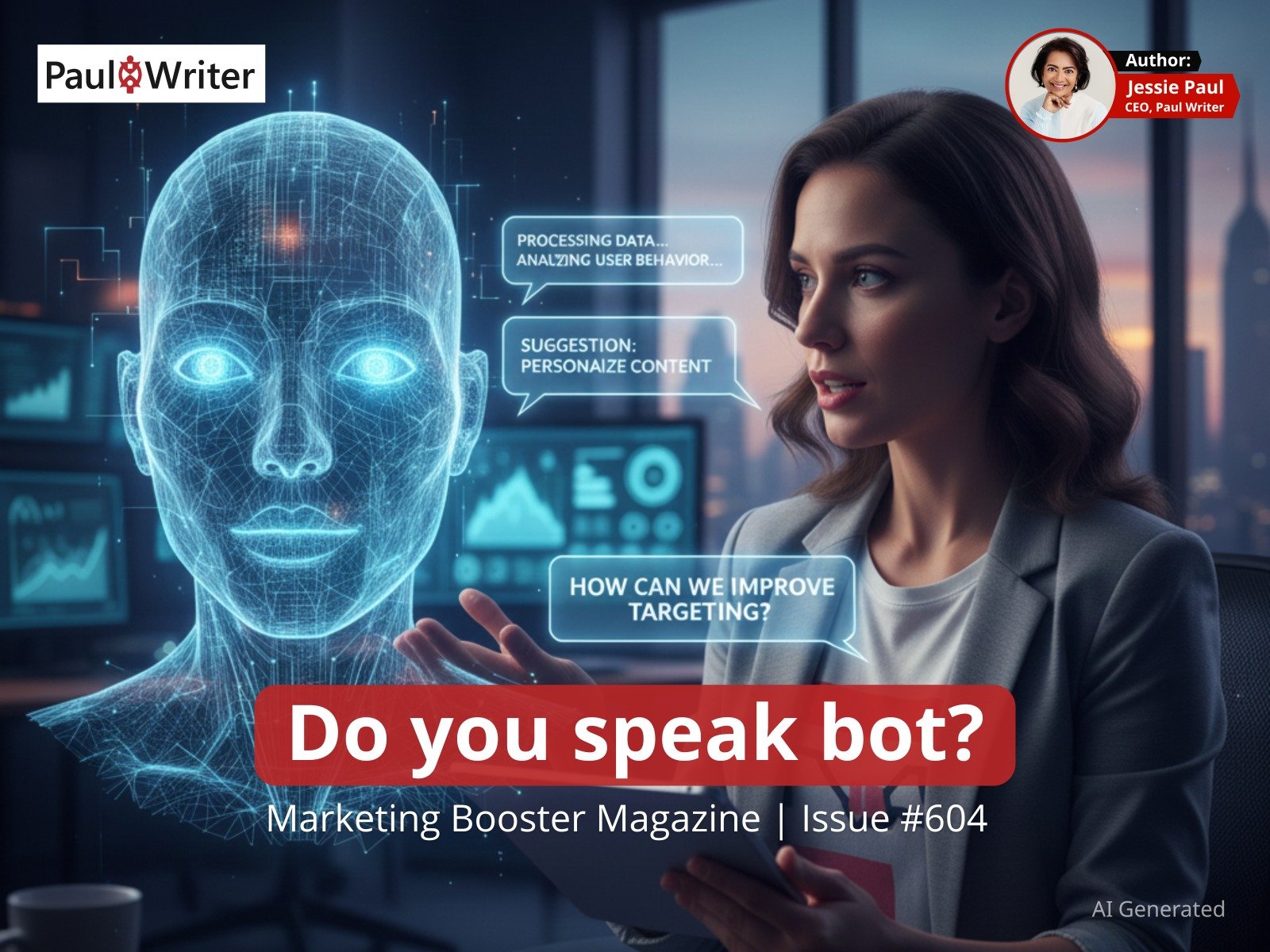
I’d like to thank the bots for getting this email into your inbox. Without their support this attempt to connect with you, dear human, would be languishing in your spam folder. Unread and unloved.
I post my newsletters on LinkedIn where I have 19,755 subscribers and 30,000+ followers. However the bots determine whether you actually see my newsletter on your feed or not.
We marketers study humans. Did we miss something?
I have sipped sugary hot tea at 100s of shops across south India. Been one of the earliest users of a mobile phone in the 90s. Visited hardware shops. Attended micro-finance kendra meetings. Purchased insurance online. Bought an apartment (!). All in an attempt to better understand the needs of my potential consumers.
Of course, we marketers aren’t the target audience for every product and we rely on research to bridge the gap.
Consumer behaviour is a vast subject and one that every marketer has studied. Each aspect of consumer behaviour – semantics, colours, pricing strategies has vast quantities of research and knowledge behind it. Marketers tap into this to shape their product and marketing strategies. We work hard to put ourselves in the shoes of our target audience, often engaging in market visits, research and immersion. IKEA for example studied 2000 homes prior to entering India. Kantar offers syndicated reports that cover as many as 60,000 people.
Clearly, we try very, very hard to speak human. To find products that address their needs and wants and communicate what we offer in the most engaging way possible.
Do the bots and algorithms care?
No.
Their metrics for success are not the same. They may be looking for how much time you will spend on their platform as a result of a piece of content, how much another client is willing to pay for that specific eyeball, whether viewing this piece of content will irritate the consumer.
The customer is essentially behind a locked gate and while your product is something they may find very relevant and useful, if you can’t unlock that gate, they’ll never find it.
As marketers we really, really, have to learn to talk to the bots.
Before it is too late. Here’s why.
The bots are owning wallets with Agentic AI!
So far we have been influenced by the algorithms, often strongly so, but we have largely retained the decision making process with humans. There are outliers like media buying, and algorithmic stock trading, but most purchase decisions require human intervention.
Agentic AI is going to change that. Amazon doesn’t want Perplexity’s bots pretending to be human and running around its platform. I wonder why? Could it be that these bots are better at sorting out the reams of information available about every little thing and determining what is my best option? And that this could be contrary to Amazon’s goals?
My “agent bot” is not interested in browsing other products, will not be swayed by identical products that are targeting an eco-friendly or female consumer with green or pink washing, for example.
Comet painstakingly details its search process and the algorithm it is using to refine searches at present. Over time as we trust it more we can ask for a ‘silent’ search. And let it decide on our behalf as it learns more and more about our preferences. By then hopefully we will have guardrails to ensure that our agents are acting in our best interests not that of their owners.
2026: the Ice Age for (some) Marketers.
Most of us market to humans. And we’re used to marketing to intermediaries such as distributors, retailers, advisors, and influencers. But. And this is a big but, these intermediaries have been all humans! Only SEO specialists have focused on “selling” to the algorithm. With AI these SEO skills are also going to require a major rethink as organic searches and click-throughs decline, replaced by AI snippets and in-browser searches.
In 2026, we’re going to have to:
A. Market to the bots
B. Market to consumers to demand that the bots choose us
C. Bypass the bots
This is a structural shift that is far greater and likely to be faster than the ecommerce revolution. Accompanied by global security and economic uncertainties 2026 promises to be a testing year.
Are you ready?
I have opted out of Kindle and gone back to reading physical books. Bypassing the bots in some ways. The two most recent books are “Man’s Search for Meaning” by Viktor Frankl and Marsha Linehan’s “Building a Life Worth Living”.
Both show that humans can survive any challenge.
Have a great December!